How Jersey Moving Pro Manages Relocations During Nor'easter Season
Anyone who has lived through a New Jersey winter knows that a nor’easter is more than a weather headline. It is a full-body expertise: sideways snow, biting wind, ice that creeps under tires and boots, and roads that clog quickly. Moving homes during that kind of weather calls for a different playbook. The timing, the gear, the way crews load and carry, even the route selection have to shift. Over the years, I have packed crates at 5 a.m. under a gray sky that delivered sleet by 10, and I have watched well-laid plans pivot in minutes when the radar turned ugly. Done right, winter moves can still be smooth. Done wrong, they become a mess of delays, wet boxes, and frazzled families.
Reading the storm, reading the street
Nor’easters are not just heavy snow. They are complex, coastal lows that can deliver rain, snow, or a miserable icy blend depending on subtle temperature differences over a few miles. In Bergen County, a gust off the Hudson can make a slushy morning turn to ice by lunchtime. Down the Parkway, rain might fall where the radar exhibits snow inland. Understanding that micro-pattern matters more than checking a single forecast. Crews that work year after year through these systems learn to read a driveway surface the way a carpenter reads wood grain. They notice how a sloped paver path will glaze before the asphalt street does, and they build the day around those details.
A winter move is not one decision. It is a series of them, from when to salt a walkway to when to pause loading if the wind kicks up and turns a mattress into a sail. A schedule that looks calm at 6 p.m. can change by midnight if the storm track nudges twenty miles west. The best operations stay flexible, keep communication crisp, and budget buffers into the timetable.
The Jersey Moving Pro playbook for nor’easters
Every company has a winter policy on paper. What matters is what happens on the ground at 6 a.m. when the street is a sheet of glass and the client needs to close that day. Jersey Moving Pro builds redundancies into winter moves, not because problems are certain, but because the margin for error shrinks in January and February.
The day before a forecast event, dispatch runs a fresh route analysis. Main arteries like I-80, I-280, and the Turnpike are usually cleared first, while local hills in Morris and Essex can lag. A crew headed to a townhouse cul-de-sac in Parsippany will often stage the truck at the nearest plowed artery and shuttle goods by box dolly or shoulder carry if the onsite approach is still slick. It is slower, but it is safer than forcing a 26-foot straight truck through a horseshoe driveway that has not yet been salted.
On multi-stop days, the team rearranges sequence to hit the steepest driveway first while salt still bites and traffic remains light. They reduce load heights inside the truck to prevent shifting when the vehicle inevitably brakes for a slick patch. If a client has large glass pieces or oil paintings, those are loaded into insulated crates and positioned away from door drafts that open repeatedly while the ramp is in use.
Jersey Moving Pro’s winter equipment that actually matters
Marketing lists are one thing. The gear that moves the needle is another. As temperatures drop, plastic gets brittle, cardboard wicks moisture faster, and rubber hardens. Jersey Moving Pro outfits winter trucks via rubber-backed floor runners, not just paper or thin plastic. The runners grip wet hardwood and tile, and they keep a predictable surface underfoot for hours. Crews carry ice melt rated for concrete and paver-friendly surfaces, along with a spreader, not just a coffee can. They stock spare ramp cleats when ice eats traction lines, and they swap to studded, low-temperature dollies that can handle weight without skittering on vestibule tile.
Straps change too. In the cold, cheap ratchets gum up and webbing shrinks. Winter kits include wide-handle ratchets through cold-weather lubrication and slightly longer webbing to account for stiffening. Quilted pads get doubled on corners because stiff fabric does not wrap tight around crown moulding without help. I have seen a single properly placed corner cap save a century-old mahogany hutch when a helper slipped on a landing, and that sort of win comes from having the right materials within arm’s reach, not just somewhere on the truck.
The call that sets the tone
Relocations that run well during a nor’easter start with a thorough pre-move conversation. The questions are simple but precise. What is the driveway slope and exposure? Which doors will be used? Are there homeowners association rules on salt or temporary mats? Any high-value pieces that cannot tolerate a cold soak? The goal is to surface risks early and prepare countermeasures.
On a January move in Morris Plains, a client mentioned in passing that the back steps had a slight pitch. That “slight” turned out to be a long, narrow run of sealed composite that became slick via a thin glaze. Because we knew, we brought extra non-slip treads and an additional person to spot. Everything went out the rear door without a single slip. Had that been discovered at 8 a.m. via a truck waiting and snow falling, the day would have looked very different.
Weather windows and realistic pacing
There is a temptation to sprint the moment a lull appears in the radar. Speed only works if it stays controlled. In storms with mixed precipitation, personnel will often set mini-windows inside the day. Pack and stage during heavier bands. Load during the drier hour. Drive after the plows do a pass. That kind of pacing respects the weather and reduces the risk of the one mishap that derails a whole day.
Clients sometimes ask whether to postpone. Rescheduling is an option when closings are flexible and storms look severe. When the date cannot relocation, the commitment shifts to risk management. Wider time windows ease pressure. Extra hands on the unload speed the process at dusk when temperatures fall again. The practical reality of winter is that daylight is shorter and patience has to be longer.
Protecting the house from winter itself
Snow and salt want to come inside with every step. Good teams build a controlled path from door to truck. That starts through shoveling and salting just outside the entry. Inside, they lay layered protection: rubber-backed runners over absorbent pads over cardboard where needed. Stair treads get taped non-slip covers that peel clean. High-traffic turns receive additional padding so a helper can pivot an armoire without scuffing plaster.
One detail that separates polished teams from the rest is the door arrange. A storm door can slam shut in a gust and clip a box or a forearm. Jersey Moving Pro crews pin storm doors open with soft straps, not bungee cords that bounce and snap in the cold. They also hang a transferring blanket as a wind baffle at the interior threshold to cut drafts that can drop the house temperature by several degrees in the course of a long load. If a boiler is already working hard, losing that heat makes the rest of the day miserable and can stress wood furniture.
How Jersey Moving Pro protects hardwood floors while winter moves
Hardwood reacts to moisture and grit. Winter brings both. The company uses a three-layer approach on wood floors: first, a breathable barrier that wicks small amounts of water, second, a firm runner to stabilize dollies, and third, taped seams so meltwater cannot creep under and sit on the wood. The big mistake is sealing the floor under plastic like a greenhouse. Moisture gets trapped and leaves a cloudy imprint. Using breathable underlayers solves that problem while still keeping grit away from the finish. In split-level homes, landings get extra attention because run-off from coats and boxes tends to collect there. If a client has recently refinished floors, crews will test tape adhesion on a hidden spot before laying protection.
Packing and temperature: fragile has different rules at 28 degrees
Cold changes how materials behave. China rings more sharply and chips more easily. Oil paintings stiffen. Electronics condense moisture when moved from cold to warm. You cannot change the physics, but you can pack and handle accordingly. Fragile dishware moves in double-walled boxes with extra cushioning under the bottom layer because impact forces rise in the cold. Glass tabletops receive a thin foam wrap, then shifting blankets, then a rigid sleeve, so no edge bears a point load.
For artwork, winter adds an extra step. Paintings and prints get wrapped in acid-free paper, then insulated with foam or bubble sheets, and placed in picture cartons with corner protectors. When the truck arrives at the new home, staff stage those boxes in a room that is warm but not near a radiator or vent. They do not open them immediately. The art acclimates for a few hours so condensation does not form on a cold surface. That patience saves canvases from micro-cracking and glass from fogging that drips into mats.
Electronics need the same courtesy. A laptop or receiver left in a cold truck cannot be plugged in right away. You let it reach room temperature, often two to four hours, before powering it. Jersey Moving Pro labels electronics with “warm-up required” tags during winter. It sounds fussy. It prevents the unhappy surprise of a shorted board.
Getting a truck in, getting a truck out
Nor’easters shorten the usable footprint around a home. Snow berms steal curb space. Plow piles cut turning radii. Street parking shrinks to a single lane in many neighborhoods. The solution is part timing, part diplomacy. Teams will often arrive earlier than usual to secure frontage with cones, then coordinate with neighbors so everyone can get to work and school while the truck operates. In cities and denser suburbs, they arrange for temporary no-parking if municipal rules allow. On private roads and HOAs, they provide a certificate of insurance ahead of time and abide by salt and noise policies to prevent morning conflicts that can delay the day.
On steep or narrow streets, a smaller shuttle truck sometimes ferries goods to a larger road-legal carrier waiting on the plowed artery. That adds a leg, but it avoids getting a big truck stuck on a grade that the town will not clear for hours. It is not glamorous work. It is the kind of practical call that saves a move.
How Jersey Moving Pro handles narrow streets and tight spaces
Winter magnifies tight quarters. Snowbanks squeeze drive lanes and hide storm drains, which become slick when meltwater refreezes. Jersey Moving Pro trains drivers to scout by foot first in problem neighborhoods. They measure clearance next to parked cars, note crown and camber, and arrange a backing path that avoids soft shoulders. Spotters carry high-visibility wands in predawn light. Inside buildings, elevator lobbies get protected and timed with building staff, because waiting with a loaded dolly in a cold vestibule is how fingers go numb and grip strength drops. Small tactics compound into smooth progress.
Safety that starts with hands and feet
Winter injuries are often small slips that lead to big problems. Crews rotate tasks more frequently when temperatures drop. Ten minutes on the ramp, ten minutes wrapping inside, then back out, to keep dexterity. Gloves matter. A bulky mitten warms but cannot grip a stair rail with confidence. The preferred setup is a liner plus a thin, grippy outer glove that still allows ratchet control. When those get wet, they get swapped for dry pairs from a heated bin on the truck. Wet gloves become ice in minutes in a stiff wind.
Footwear has the same trade-off. Heavy insulation aids, but too thick a sole loses feel on ladder rungs or the lip of a ramp. A mid-weight insulated boot with a stable, lugged sole and a shank to prevent flex under load strikes the balance. Crews also avoid stepping over ramp edges. They step square, keep center of gravity low when carrying tall items, and use shoulder harnesses for bulky appliances so grip becomes less of a factor.
Insurance and the winter risk profile
Accidents are rarer when people respect the conditions, but the stakes are higher. A minor bump on a dry day can turn into a drop if someone slips. That is why comprehensive coverage matters. Customers sometimes do not realize that valuation and insurance are not the same. The baseline coverage many movers include is a per-pound valuation that may not reflect actual replacement cost for antiques or heirlooms. For winter moves, it is wise to review whether full value protection or a rider for specific items makes sense, especially for fragile furniture or art.
Understanding Jersey Moving Pro’s comprehensive insurance coverage means reading the fine print on exclusions, deductibles, and process. The company will document inventory with photos, tag high-value items, and note pre-existing conditions. On storm days, they increase the photo cadence and the condition notes, because everyone benefits from clear records if a claim is necessary. It is not a substitute for careful handling, but it is a sensible backstop.
Communication that keeps everyone on the same map
Storm days stretch response times for everyone: plows, title companies, building supers, movers in east brunswick nj movers. The difference between a tolerable delay and a stressful one is often communication. Crews send early check-ins with adjusted ETAs. If a crew needs twenty extra minutes to salt, the client knows before they are looking out the window. If a closing attorney shifts times due to courthouse delays, dispatch adjusts the sequence and lets the personnel know whether to stage at a storage facility or proceed to the unload. A winter move is a small orchestra. The conductor role matters.
The Jersey Moving Pro standard for customer communication
Good communication avoids drama. Jersey Moving Pro assigns a primary contact for each job who owns the updates. That person will share a simple plan the night before, a “rolling” text when the truck leaves the yard, and any weather-related pivots as they occur. If an HOA requires an updated certificate of insurance, it is sent before dawn, not after the truck is idling at the gate. If a building only permits moves within certain hours, the crew does not heroically overrun and antagonize staff. They log progress, button up carefully, and return when rules allow. During nor’easters, respect for people and process keeps relationships smooth when patience runs thin.
Hard-won lessons from real winter days
One January in Essex Fells, a colonial with a brick walk taught us something new about radiant heat. The owner had a heated path that melted snow quickly. Wonderful in theory, but as meltwater ran to the unheated driveway it refroze into a glassy ribbon. The fix was simple once we saw it: we spread sand at the transition and rerouted foot traffic around the refreezing strip. Now, crews ask about heated surfaces in the course of winter walkthroughs and carry a few bags of sand in addition to ice melt.
Another case involved a piano coming down a split-level staircase in Montville. The forecast called for light snow, but the storm intensified midday. We had the piano on a skid board ready to load when the wind gusted and the ramp lost traction. The crew chief paused the relocation, reset using extra cleats, added a spotter at the foot, and adjusted the angle of approach to reduce push force. Five minutes of recalibration avoided a risky push during a gust. That decision, more than any piece of equipment, kept the instrument safe.
Packing timeline for cold-weather moves
Clients often ask whether to pack differently in winter. The answer is less about what goes in the box and more about when. Boxes staged overnight in garages will be colder and may wick moisture when brought into a warm truck body. We prefer to keep packed boxes in conditioned space as long as possible, then move them in a steady flow to minimize condensation cycles. If garage staging is unavoidable, we use pallets to elevate cartons from cold concrete and drape a breathable blanket to buffer temperature swings.
Delicate finishes appreciate extra patience. A lacquered table that feels room temperature will still have a core cooler than the surface if the room has drafts. Blankets should be snugged, not tightened to the point that cold, stiff fibers press a ridge into the finish. That nuance comes from touch, not a manual. Veterans feel when material is ready to handle.
Scheduling around schools, work, and plows
Life does not pause for storms. Kids still need to get to school, lawyers still schedule closings, and towns still prioritize plow routes for commuter corridors. The best winter moves weave through those currents. Early first loads leave driveways before school buses hit the neighborhood. Midday driving legs aim to land after main roads clear but before afternoon freeze. If a municipality uses brine on a specific hill around 9 a.m., crews will avoid that road until 10 when traction improves. These are modest adjustments that make the day less dicey.
Jersey Moving Pro’s reference to preparing your home for winter moves
A short, focused checklist supports clients set the stage without turning the week upside down:
- Clear a path at least three feet wide from the truck position to the entry, including down to pavement. Stage delicate items and electronics in a single room so they can acclimate at the new home before use. Set aside shovels, salt, and a broom for quick touch-ups, plus a few old towels for wet boots near the entry. Confirm elevator reservations or HOA access rules 24 hours in advance, including any weather clauses. Identify where floor protection can be laid without blocking heat vents or return air grilles.
When rush hour meets snowfall
Nor’easters often roll in sync with morning or evening rush, which means a move straddles slow traffic both ways. Interstate on-ramps glaze first. Bridges catch wind and ice. A cautious crew will leave 15 to 30 minutes earlier than usual to bake in that reality, but they will not rush on the highway. GPS helps, but experience with local alternates matters more when the app sends everyone down the same “clever” detour that was never plowed. Staff who know that Ridgedale, Eagle Rock, or Valley Road stay serviceable when smaller cut-throughs don’t are the ones who land on time.
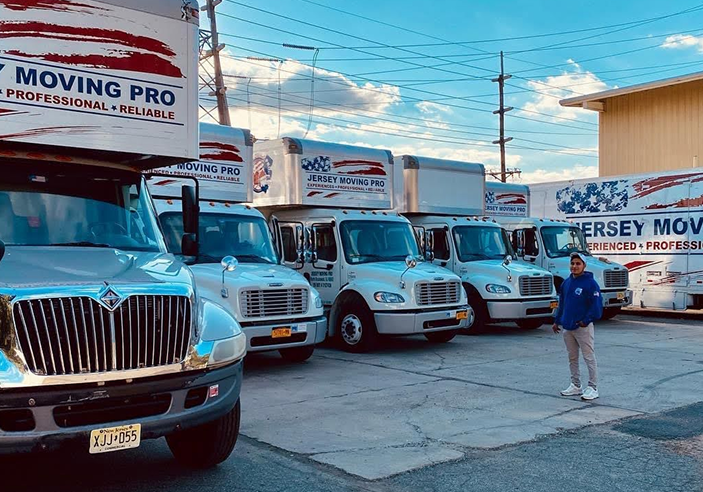
Jersey Moving Pro bakes seasonal routing into its plans. Drivers track which municipal lots get cleared early and which hills are notorious for black ice. They also keep an eye on wind advisories for high-profile vehicles. A moving truck has a large, flat box that catches gusts. On exposed stretches, a moderate crosswind can push a truck a foot or two within a lane. That is not a white-knuckle moment if the driver expects it and has left a larger buffer.
Storage as a pressure release valve
Not every winter move can line up like a relay race from old home to new. Closings slip. Driveways remain blocked by municipal plow piles. Buildings shut down elevators while storms. Temporary storage absorbs that shock. Short-term, climate-controlled storage is especially helpful for high-value items that should not sit overnight in a cold truck body. If a nor’easter stalls a plan by a day, the client sleeps while their goods rest at a stable temperature, not in a box body that drops to the twenties.
Jersey Moving Pro uses storage tactically during winter. If a delivery window tightens or a road closure looms, they will stage a portion of the load into storage and deliver in two smaller, safer runs rather than one stressed push at dusk on icy streets. That kind of flexibility keeps promises realistic.
What separates a winter-ready crew from the rest
Skill is part muscle memory, part mindset. Crews that excel in nor’easters share a few habits. They respect the cold without dramatizing it. They reset when a step looks risky instead of pushing through. They talk, constantly, so the person on the bottom of a tall piece knows what the person on top sees. They double-check the simple things, like the angle of a ramp or the lay of a runner, because those little details define whether the day feels methodical or chaotic.
The Jersey Moving Pro pledge to reliability in rough weather
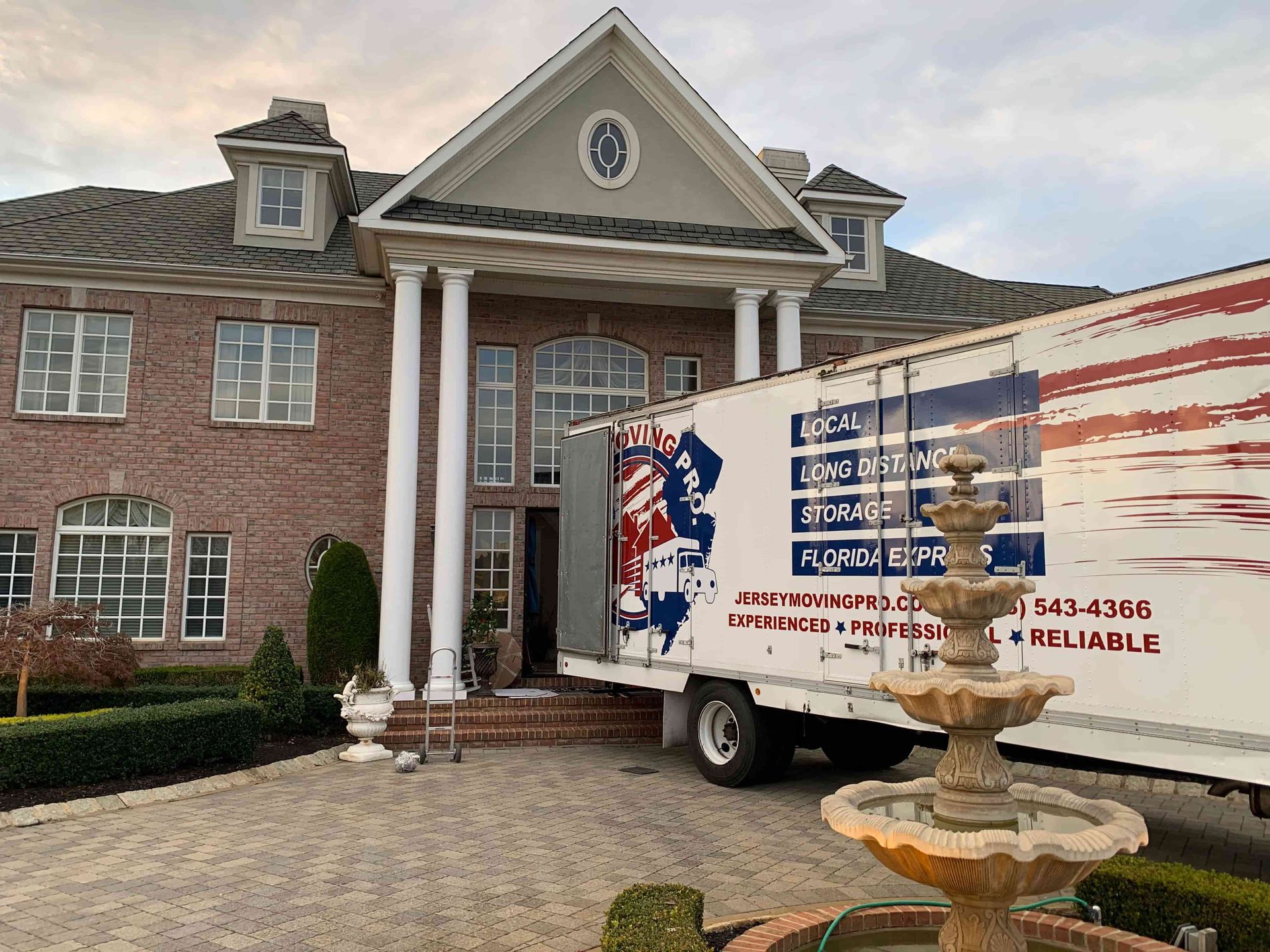
Reliability, in winter, is not a promise to beat the storm. It is a promise to plan honestly, communicate early, equip properly, and put people first. Jersey Moving Pro trains teams to make conservative calls when conditions deteriorate and to offer real options when clients must move on a specific date. That can mean an earlier start, an extra crew member, or a staged delivery with storage. It can also mean saying no to a dangerous driveway until it is properly cleared. Clients remember the move that felt careful and competent more than the one that chased a timetable at all costs.
A nor’easter can be managed
There is an old line among winter movers that the storm is just another participant in the move. Treat it using respect, and it will still slow you but not stop you. Ignore it, and it will make decisions for you. The difference shows up in the choices made the day before, the morning of, and the minute a gust rattles the ramp. Over many winters, the patterns become familiar. Cold magnifies small mistakes and rewards calm preparation.
When a family in Parsippany needs to be out by Friday and a coastal low spins up on Thursday, a practiced team reaches for the same tools every time: solid floor protection, insulated packing for fragile items, steady pacing, and decisive communication. That approach works in Morris County colonials using tight staircases, in condo buildings with managed elevators, and in split-levels where a piano has to make two turns. The nor’easter still arrives, wind howling and snow falling sideways. The move still lands, intact and unhurried, because the plan accounted for winter as more than scenery.